What Is a Scooter? Complete Beginner’s Guide to Modern Scooters
Discover how scooters work, explore different scooter types, understand key features, and learn why electric scooters are transforming modern transportation.
Scooters have rapidly become one of the most practical and eco-friendly transportation solutions worldwide. Whether used for commuting, recreation, or short-distance travel, modern scooters provide convenience, affordability, and portability for riders of all ages.
What Is a Scooter?
Scooters have become one of the most practical and widely used personal transportation solutions in modern cities. Designed for convenience, portability, and efficient short-distance travel, scooters are used by commuters, students, delivery riders, and recreational users around the world. From traditional kick scooters to advanced electric models, scooters continue to evolve as an eco-friendly alternative to conventional transportation.
Basic Definition of a Scooter
A scooter is a lightweight two-wheeled vehicle designed for personal transportation. Most scooters feature a narrow deck for standing, handlebars for steering, and small wheels that allow smooth movement across roads and pathways. Depending on the type, scooters may be powered manually by pushing with the foot or electronically using a rechargeable motor and battery system.
Modern scooters are available in various designs and performance levels, making them suitable for children, adults, commuters, and even off-road riders. Their compact structure and user-friendly controls make scooters one of the easiest transportation options for beginners.
The Evolution of Modern Scooters
Scooters have evolved significantly over the years. Early scooters were simple manually operated devices primarily designed for children and recreational use. As urban transportation needs increased, manufacturers began developing stronger, faster, and more efficient scooter models for adults and daily commuters.
The introduction of electric scooters transformed the industry by combining battery-powered motors with lightweight portable designs. Today’s modern e scooters include advanced technologies such as:
- high-capacity lithium batteries
- smart braking systems
- digital displays
- suspension systems
- foldable frames
- mobile app connectivity
These innovations have made scooters more practical for urban commuting, business use, and environmentally conscious transportation.
Why Scooters Are Becoming So Popular
Scooters are rapidly growing in popularity because they offer a convenient, affordable, and eco-friendly way to travel short distances. In crowded cities where traffic congestion and parking issues are common, scooters provide a faster and more flexible commuting solution.
Some of the key reasons behind the increasing demand for scooters include:
- easy portability and storage
- low operating costs
- environmentally friendly transportation
- beginner-friendly riding experience
- reduced fuel dependency
- efficient short-distance commuting
- modern smart technology integration
Electric scooters, in particular, have become highly popular among urban commuters because they help reduce travel time while offering a more sustainable transportation alternative.
Scooters combine convenience, portability, and efficient urban mobility in one compact transportation solution.
How Does a Scooter Work?
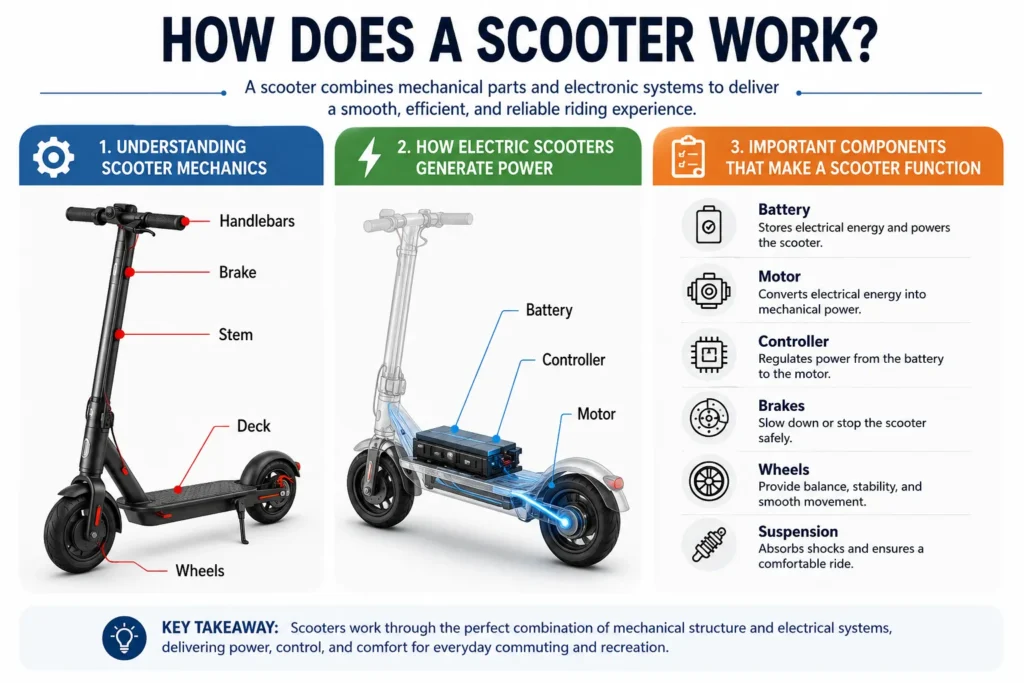
Scooters operate through a simple yet highly efficient mechanical system designed to provide smooth and controlled transportation. Whether manual or electric, scooters use a combination of wheels, steering mechanisms, braking systems, and structural components to help riders travel safely and comfortably. Modern electric scooters also integrate battery-powered motors and electronic controllers to improve speed, efficiency, and riding convenience.
Understanding how scooters work can help beginners choose the right model, maintain their scooter properly, and ride more safely.
Understanding Scooter Mechanics
The basic mechanics of a scooter are relatively simple. Most scooters are built around a lightweight frame that supports the rider while allowing easy maneuverability. The handlebars control steering, while the wheels provide movement and balance.
In traditional kick scooters, riders generate motion by pushing one foot against the ground while keeping the other foot on the scooter deck. This manual propulsion allows the scooter to move forward using momentum.
Electric scooters, however, replace manual pushing with a motor-powered system. When the rider activates the throttle, electrical energy from the battery powers the motor, causing the wheels to rotate and move the scooter forward.
Scooters are specifically designed to provide:
- stable riding control
- smooth acceleration
- responsive braking
- lightweight portability
- efficient short-distance transportation
Their compact design makes them ideal for urban commuting and recreational riding.
How Electric Scooters Generate Power
Electric scooters generate power through a rechargeable battery and electric motor system. The battery stores electrical energy, while the motor converts that energy into mechanical movement that drives the wheels.
Most modern electric scooters use lithium-ion batteries because they are lightweight, energy-efficient, and capable of providing longer riding ranges. When the rider presses the throttle, signals are sent to the electronic controller, which regulates how much power flows from the battery to the motor.
The motor then rotates the wheel to propel the scooter forward. Depending on the scooter model, the motor may be located:
- inside the front wheel hub
- inside the rear wheel hub
- connected through a belt or chain drive system
The speed and performance of an electric scooter depend on several factors, including:
- motor wattage
- battery capacity
- rider weight
- terrain conditions
- tire type
- weather conditions
Many modern electric scooters also include regenerative braking systems, which help recover a small amount of energy during braking to improve battery efficiency.
Important Components That Make a Scooter Function
Several essential components work together to ensure proper scooter performance, safety, and comfort.
Frame and Deck
The frame forms the main structure of the scooter, while the deck provides a platform where the rider stands during operation.
Handlebars and Steering System
The handlebars allow riders to control direction and maintain balance while riding.
Wheels and Tires
Scooter wheels help maintain stability and smooth movement across different surfaces. Tire types may vary depending on road conditions and intended usage.
Electric Motor
The motor generates the driving force that powers electric scooters and determines overall acceleration and climbing performance.
Battery Pack
The battery stores electrical energy required to operate the scooter. Higher-capacity batteries typically provide longer riding ranges.
Braking System
Scooters may use disc brakes, drum brakes, electronic brakes, or regenerative braking systems to slow down safely and maintain rider control.
Suspension System
Suspension components absorb shocks and vibrations, improving riding comfort on uneven roads and rough terrain.
Controller Unit
The controller acts as the scooter’s electronic management system by regulating power delivery between the battery and motor.
Understanding how scooters work helps riders choose safer, more efficient, and reliable transportation options.
Different Types of Scooters
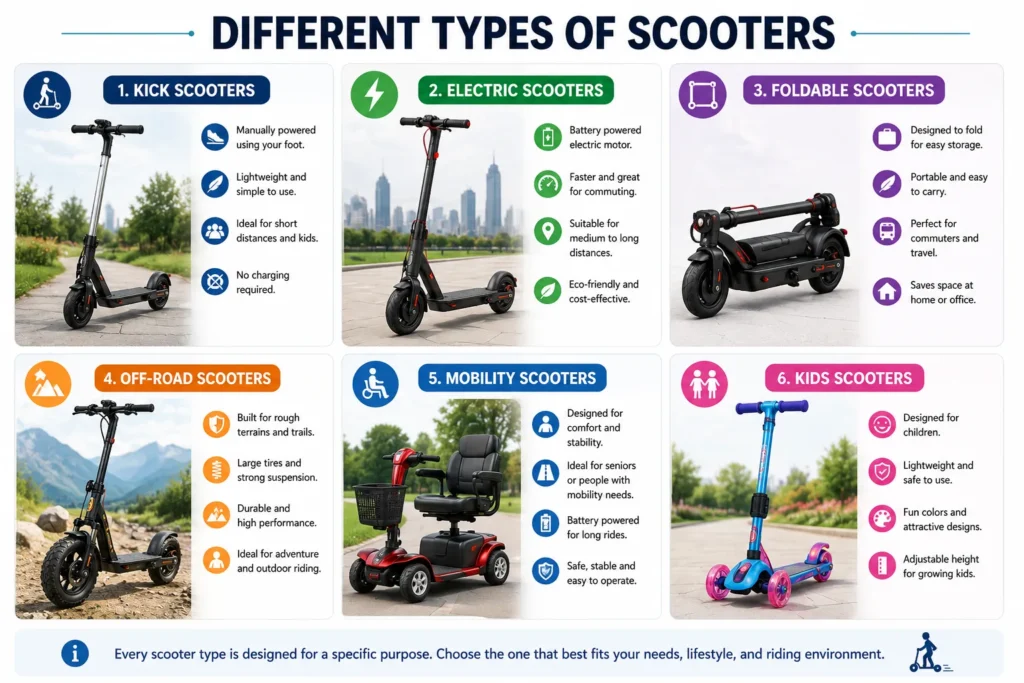
Scooters are available in a wide range of designs and configurations to suit different riders, environments, and transportation needs. From lightweight commuter scooters to heavy-duty off-road models, each type is built with specific features that enhance performance, comfort, and usability.
Understanding the different types of scooters can help beginners choose the right model based on riding style, terrain, portability, and daily usage requirements.
Kick Scooters
Kick scooters are manually powered scooters that move when the rider pushes against the ground with one foot. These scooters are lightweight, simple to operate, and commonly used for short-distance travel and recreational riding.
Most kick scooters feature:
- a compact frame
- small wheels
- adjustable handlebars
- foldable designs for portability
Because they do not require batteries or motors, kick scooters are affordable, low-maintenance, and beginner-friendly. They are especially popular among children, teenagers, and casual riders looking for a convenient mobility option.
Kick scooters are ideal for:
- short urban trips
- school commuting
- recreational riding
- fitness-oriented transportation
Electric Scooters
Electric scooters, also known as e scooters, are battery-powered personal transportation devices designed for efficient urban mobility. These scooters use an electric motor and rechargeable battery system to provide smooth acceleration without manual pushing.
Modern electric scooters often include advanced features such as:
- digital displays
- LED lighting
- regenerative braking
- suspension systems
- mobile app connectivity
- multiple riding modes
Electric scooters are widely used for:
- daily commuting
- campus transportation
- delivery services
- eco-friendly travel
- short-distance city transportation
Their convenience, portability, and low operating costs have made electric scooters one of the fastest-growing transportation solutions worldwide.
Foldable Scooters
Foldable scooters are specifically designed for portability and convenient storage. These scooters include folding mechanisms that allow riders to quickly collapse the frame for carrying or storing in small spaces.
Both manual and electric scooters may feature foldable designs. Foldable scooters are especially useful for:
- commuters using public transportation
- office workers
- students
- travelers
- apartment residents
The lightweight structure and compact folding capability make these scooters highly practical for modern urban lifestyles.
Key advantages include:
- easy transportation
- compact storage
- lightweight construction
- improved convenience for daily commuting
Off-Road Scooters
Off-road scooters are built for rough terrain, uneven surfaces, and outdoor adventure riding. These scooters feature stronger frames, larger tires, powerful motors, and advanced suspension systems to handle dirt paths, gravel roads, hills, and challenging environments.
Compared to standard commuter scooters, off-road models typically offer:
- higher motor power
- wider tires
- improved shock absorption
- enhanced traction
- stronger braking systems
Off-road scooters are suitable for riders seeking:
- outdoor adventure
- trail riding
- high-performance capabilities
- enhanced durability
- all-terrain transportation
Their rugged design allows riders to travel comfortably across surfaces that traditional scooters may struggle to handle.
Mobility Scooters
Mobility scooters are specialized scooters designed to assist individuals with limited mobility or physical disabilities. These scooters prioritize comfort, stability, and ease of use while providing greater independence for daily activities.
Mobility scooters commonly include:
- comfortable seating
- armrests
- larger wheels
- storage baskets
- adjustable speed controls
- long battery life
They are widely used for:
- shopping trips
- medical mobility assistance
- community transportation
- indoor and outdoor travel
Mobility scooters play an important role in improving accessibility and personal independence for many users.
Kids Scooters
Kids scooters are designed specifically for younger riders and focus heavily on safety, balance, and ease of control. These scooters are usually smaller, lighter, and slower than adult models.
Many children’s scooters include:
- adjustable handlebars
- three-wheel stability systems
- colorful designs
- lightweight materials
- beginner-friendly steering systems
Kids scooters help children develop:
- coordination
- balance
- confidence
- outdoor activity habits
Depending on age and skill level, children may use either manual kick scooters or low-speed electric scooters designed specifically for younger riders.
Different scooter categories are designed to meet specific riding styles, terrains, and transportation needs.
Benefits of Using a Scooter
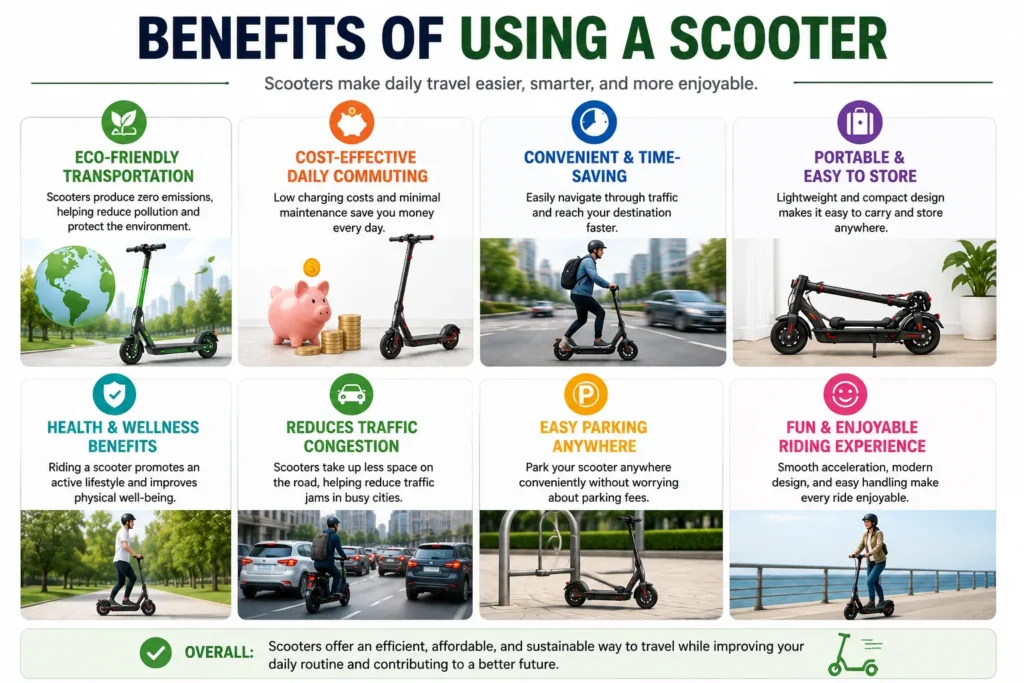
Scooters have become one of the most practical transportation solutions for modern lifestyles. Whether used for commuting, recreation, or short-distance travel, scooters offer several advantages that make them increasingly popular among riders of all ages. Their compact design, low operating costs, and ease of use make scooters an efficient alternative to traditional vehicles in busy urban environments.
As cities continue to face traffic congestion, fuel expenses, and environmental concerns, scooters provide a smart and sustainable mobility option for everyday transportation.
Eco-Friendly Transportation
One of the biggest advantages of scooters, especially electric scooters, is their environmentally friendly nature. Unlike fuel-powered vehicles, electric scooters produce significantly lower carbon emissions and help reduce air pollution in urban areas.
Because electric scooters operate using rechargeable battery systems, they consume far less energy compared to cars and motorcycles. This makes them an excellent transportation choice for environmentally conscious riders seeking cleaner mobility solutions.
Eco-friendly benefits of scooters include:
- reduced greenhouse gas emissions
- lower fuel consumption
- decreased urban air pollution
- quieter transportation
- support for sustainable urban mobility
As global interest in green transportation continues to grow, scooters are becoming an important part of eco-friendly city infrastructure.
Cost-Effective Daily Commuting
Scooters are widely recognized for their affordability and low operating expenses. Compared to cars and motorcycles, scooters require significantly less spending on fuel, maintenance, parking, and insurance.
Electric scooters are especially economical because they can be charged using standard household electricity at a relatively low cost. In many cases, daily commuting with an electric scooter costs only a fraction of traditional transportation expenses.
Some major cost-saving benefits include:
- low charging costs
- reduced maintenance requirements
- minimal parking expenses
- fewer mechanical repairs
- affordable long-term transportation
For students, office workers, and urban commuters, scooters provide a highly budget-friendly mobility solution.
Portable and Easy to Store
Modern scooters are designed with portability and convenience in mind. Many scooters feature lightweight frames and foldable mechanisms that make them easy to carry, transport, and store in small spaces.
Foldable electric scooters are especially popular among commuters who combine scooter travel with buses, trains, or office transportation. Their compact structure allows users to store them under desks, inside apartments, or in vehicle trunks without requiring large parking spaces.
Portability advantages include:
- convenient storage
- easy carrying
- reduced parking concerns
- travel-friendly design
- practical use in crowded cities
This flexibility makes scooters highly suitable for modern urban lifestyles where space efficiency is increasingly important.
Convenient for Urban Travel
Scooters are ideal for navigating busy city environments where traffic congestion and limited parking can create daily transportation challenges. Their compact size allows riders to move efficiently through crowded streets and narrow urban spaces.
Electric scooters are particularly effective for short-distance commuting because they provide faster travel compared to walking while remaining more flexible than larger vehicles.
Urban travel benefits include:
- easier navigation in traffic
- faster short-distance transportation
- improved commuting efficiency
- simplified parking
- reduced travel stress
As cities continue developing smart mobility systems, scooters are becoming a preferred transportation option for urban commuters worldwide.
Beginner-Friendly Mobility Option
Scooters are generally easy to learn and operate, making them suitable for beginners with little or no riding experience. Most scooters feature simple controls, stable handling, and intuitive acceleration and braking systems.
Compared to motorcycles or larger vehicles, scooters require less technical skill and physical effort to ride safely. Many beginner riders quickly gain confidence due to the scooter’s lightweight design and user-friendly controls.
Beginner-friendly features often include:
- simple throttle controls
- lightweight handling
- stable riding platform
- low learning curve
- comfortable riding position
These characteristics make scooters an excellent entry-level transportation option for riders of different ages and experience levels.
Scooters offer a practical balance between affordability, convenience, and sustainable transportation.
Common Uses of Scooters
Scooters are widely used across different industries, lifestyles, and transportation needs due to their flexibility, affordability, and convenience. From urban commuting to recreational activities, scooters provide an efficient solution for short-distance travel while reducing transportation costs and environmental impact.
Modern scooters, especially electric scooters, are now commonly seen in cities, campuses, tourist destinations, and commercial delivery services around the world.
Daily Commuting
One of the most common uses of scooters is daily commuting. Many riders use scooters to travel between home, work, school, or public transportation stations because they provide a fast and convenient alternative to walking or driving.
Electric scooters are especially popular among urban commuters because they help reduce travel time while avoiding traffic congestion and parking difficulties. Their compact size and low operating costs make them ideal for short to medium-distance transportation.
Benefits of using scooters for commuting include:
- reduced fuel expenses
- easier parking
- faster travel in congested areas
- lower transportation costs
- environmentally friendly commuting
As cities become more crowded, scooters continue to grow as an effective solution for modern urban mobility.
Campus Transportation
Scooters are widely used by students and staff for transportation across large educational campuses. Universities and colleges often cover significant distances between classrooms, dormitories, libraries, and parking areas, making scooters a practical transportation option.
Electric scooters allow students to move quickly around campus while carrying backpacks and personal items comfortably. Their portability also makes them easy to store in dorm rooms, classrooms, or study areas.
Scooters are popular on campuses because they provide:
- quick movement between locations
- affordable student transportation
- compact storage
- reduced walking fatigue
- convenient mobility for large campuses
Many campuses worldwide now include designated scooter parking and riding areas to support growing demand.
Recreational Riding
In addition to transportation, scooters are commonly used for recreational and leisure activities. Many riders enjoy scooters for outdoor fun, exercise, social activities, and weekend adventures.
Kick scooters and off-road electric scooters are especially popular for recreational riding because they offer an enjoyable and engaging riding experience. Parks, trails, beachfront areas, and urban pathways are common locations for casual scooter riding.
Recreational benefits include:
- outdoor activity and exercise
- stress relief and relaxation
- social entertainment
- adventure riding opportunities
- improved balance and coordination
Scooters provide a fun and accessible activity for riders of different ages and skill levels.
Delivery and Business Use
Scooters are increasingly used in delivery services and business operations because they provide efficient transportation in busy urban environments. Food delivery riders, couriers, and local service providers often use electric scooters to complete short-distance deliveries quickly and affordably.
Compared to larger vehicles, scooters offer several advantages for commercial use:
- lower operating costs
- faster navigation through traffic
- easier parking
- reduced fuel expenses
- improved delivery efficiency
Businesses benefit from scooters because they help reduce transportation costs while improving productivity in crowded city areas.
As e-commerce and local delivery services continue growing, electric scooters are becoming an important part of modern urban logistics.
Travel and Tourism
Scooters are also widely used in travel and tourism industries, especially in cities and tourist destinations where visitors need convenient transportation for sightseeing and local exploration.
Many tourists prefer scooters because they allow flexible movement without relying heavily on taxis, buses, or rental cars. Electric scooter rental services are now available in numerous cities worldwide, offering travelers an easy way to explore attractions and neighborhoods.
Travel-related advantages include:
- convenient local transportation
- affordable sightseeing mobility
- easier access to tourist attractions
- reduced transportation stress
- enjoyable travel experiences
Scooters provide tourists with greater freedom and flexibility while exploring urban environments and recreational destinations.
Modern scooters are used across cities worldwide for efficient, flexible, and affordable transportation.
Are Scooters Safe?
Scooters are generally considered safe when used responsibly and operated according to proper safety guidelines. Like any form of personal transportation, rider safety largely depends on riding behavior, road awareness, equipment quality, and regular maintenance. Modern scooters are equipped with advanced braking systems, lighting features, and stability improvements that help enhance rider protection and overall control.
For beginners and experienced riders alike, understanding basic scooter safety practices is essential for reducing risks and improving confidence while riding in urban environments.
Essential Scooter Safety Tips
Following proper safety precautions can significantly reduce the risk of accidents and injuries while riding a scooter. Riders should always prioritize awareness, control, and responsible riding habits regardless of scooter type or riding experience.
Important scooter safety tips include:
- always inspect the scooter before riding
- obey local traffic laws and speed limits
- avoid distracted riding
- maintain a safe riding speed
- use both hands while operating the scooter
- stay visible to pedestrians and vehicles
- avoid riding on unsafe or damaged roads
- slow down on wet or slippery surfaces
Riders should also become familiar with their scooter’s braking system, acceleration response, and handling characteristics before riding in busy areas.
Recommended Safety Gear
Wearing appropriate protective equipment is one of the most effective ways to improve scooter safety. Safety gear helps reduce the risk of serious injuries in case of sudden stops, falls, or collisions.
Recommended scooter safety gear includes:
Helmet
A certified helmet is the most important protective item for scooter riders because it helps protect the head during accidents.
Knee and Elbow Pads
Protective pads help reduce injuries caused by falls or impacts, especially for beginner riders.
Gloves
Riding gloves improve grip and provide hand protection during extended rides or emergencies.
Reflective Clothing
Reflective jackets or accessories improve visibility during nighttime or low-light riding conditions.
Proper Footwear
Closed-toe shoes with strong grip provide better stability and control while riding.
Using proper safety equipment greatly improves rider confidence and overall protection.
Safe Riding Practices for Beginners
Beginner riders should focus on developing balance, control, and road awareness before attempting higher speeds or challenging environments. Learning proper riding techniques helps build confidence and reduces the likelihood of accidents.
Safe riding practices for beginners include:
- start riding in low-traffic areas
- practice braking gradually
- maintain a balanced riding posture
- keep knees slightly bent for stability
- avoid sudden acceleration or sharp turns
- learn how to safely navigate obstacles
- ride at comfortable speeds
- remain alert to pedestrians and vehicles
New riders should also take time to understand local scooter regulations and permitted riding areas before using scooters on public roads.
Common Riding Mistakes to Avoid
Many scooter-related accidents occur because of avoidable riding mistakes and unsafe habits. Understanding these common errors can help riders improve safety and reduce unnecessary risks.
Common scooter riding mistakes include:
- riding without a helmet
- using excessive speed in crowded areas
- ignoring road conditions
- riding while distracted
- braking suddenly at high speeds
- carrying excessive weight
- failing to maintain the scooter properly
- riding in poor weather without caution
Riders should also avoid attempting stunts or aggressive maneuvers unless using specialized equipment in controlled environments.
Regular scooter maintenance, responsible riding behavior, and proper protective gear all contribute to safer riding experiences.
Safe riding habits and proper protective equipment significantly improve scooter safety and rider confidence.
How to Choose the Right Scooter
Choosing the right scooter depends on several important factors, including riding style, commuting distance, terrain conditions, portability, and overall budget. With many scooter models available on the market, understanding the key features and performance specifications can help riders select a scooter that matches their daily transportation needs and comfort preferences.
Whether purchasing a scooter for commuting, recreational riding, campus transportation, or off-road adventures, evaluating the right combination of performance, durability, and convenience is essential for long-term satisfaction.
Choosing Based on Riding Needs
The first step in selecting a scooter is identifying how and where it will primarily be used. Different scooters are designed for specific riding environments and user requirements.
For example:
- commuters may prefer lightweight foldable electric scooters
- off-road riders may need larger tires and stronger suspension systems
- students often benefit from compact portable scooters
- recreational riders may prioritize comfort and speed
- delivery riders typically require longer battery range and durability
Understanding riding needs helps narrow down important features such as motor power, portability, tire type, and riding comfort.
Riders should also consider:
- average travel distance
- road conditions
- frequency of use
- storage availability
- local riding regulations
Choosing a scooter based on realistic daily usage improves both performance and overall riding experience.
Understanding Battery Range
Battery range refers to the maximum distance an electric scooter can travel on a single charge. This is one of the most important factors when selecting an electric scooter, especially for commuters and frequent riders.
Most electric scooters use rechargeable lithium-ion batteries, and actual riding range may vary depending on:
- rider weight
- riding speed
- terrain conditions
- weather
- tire pressure
- motor efficiency
Short-range scooters are often suitable for:
- campus transportation
- neighborhood travel
- short urban commutes
Long-range scooters are better for:
- daily commuting
- delivery work
- extended city travel
- frequent outdoor riding
Riders should always choose a scooter with slightly more battery range than their expected daily travel distance to ensure reliable performance.
Weight Capacity and Portability
Weight capacity is another important consideration because every scooter is designed to support a specific rider weight limit. Exceeding the recommended capacity can reduce performance, shorten battery life, and increase wear on the scooter’s components.
Before purchasing a scooter, riders should review:
- maximum load capacity
- frame durability
- deck size
- riding comfort
Portability is equally important for riders who need to carry or store their scooter frequently. Lightweight and foldable scooters are ideal for:
- apartment living
- office commuting
- public transportation
- travel and storage convenience
Foldable electric scooters are particularly popular because they provide a balance between mobility and compact storage.
Tire and Suspension Considerations
Tires and suspension systems significantly affect scooter comfort, handling, and riding stability. Choosing the right setup depends largely on road conditions and intended usage.
Tire Types
Scooters commonly use:
- solid tires
- pneumatic (air-filled) tires
- tubeless tires
Solid tires require less maintenance and are resistant to punctures, while pneumatic tires provide better shock absorption and smoother rides on uneven roads.
Suspension Systems
Suspension systems help absorb vibrations and impacts from rough surfaces. Scooters with front or dual suspension are generally more comfortable for:
- long-distance commuting
- uneven roads
- off-road riding
- rough urban environments
Riders who frequently travel on bumpy or poorly maintained roads should prioritize scooters with high-quality suspension systems and larger tires for improved comfort and stability.
Budget and Performance Factors
Budget plays a major role when selecting a scooter because features and performance levels vary significantly across different price ranges. Entry-level scooters are generally more affordable and suitable for casual riders, while premium scooters offer higher speeds, longer battery ranges, and advanced features.
When evaluating scooter value, riders should compare:
- motor power
- battery quality
- braking systems
- build durability
- portability
- warranty coverage
- safety features
In many cases, investing in a higher-quality scooter can provide better long-term reliability, improved riding comfort, and lower maintenance costs.
Balancing affordability with performance helps riders find a scooter that meets both their transportation needs and financial expectations.
Selecting the right scooter depends on balancing performance, comfort, budget, and intended usage.
Best Scooter Accessories for Beginners
The right scooter accessories can significantly improve safety, comfort, convenience, and overall riding experience for beginner riders. Whether using a scooter for commuting, recreation, or daily travel, investing in essential accessories helps riders stay protected while making scooter use more practical and enjoyable.
Modern scooter accessories are designed to support safer riding, better organization, improved visibility, and enhanced portability for both manual and electric scooters.
Helmets and Protective Gear
Protective gear is one of the most important investments for any scooter rider, especially beginners. Safety equipment helps reduce the risk of injuries and provides greater confidence while riding in urban environments or crowded areas.
Essential Protective Gear Includes:
- certified scooter helmets
- knee pads
- elbow pads
- riding gloves
- reflective safety clothing
A high-quality helmet is particularly important because it protects the head during falls or sudden impacts. Riders should choose helmets that provide proper ventilation, comfortable fitting, and certified safety standards.
Protective gear is strongly recommended for:
- beginner riders
- high-speed electric scooter users
- off-road riding
- nighttime commuting
- long-distance travel
Wearing proper safety equipment greatly improves overall rider protection and safety awareness.
Scooter Locks
Scooter locks help protect scooters from theft when parked in public spaces. Since electric scooters are lightweight and portable, using a reliable locking system is essential for riders who frequently commute or travel in busy urban areas.
Common scooter lock types include:
- U-locks
- cable locks
- folding locks
- chain locks
- smart security locks
A strong lock should provide:
- durable construction
- weather resistance
- compact portability
- tamper-resistant security
For maximum protection, riders should lock both the scooter frame and wheel to a secure fixed object whenever possible.
Using a high-quality scooter lock provides greater peace of mind and helps reduce theft risks during daily use.
Phone Mounts and Holders
Phone mounts are practical accessories that allow riders to securely attach smartphones to scooter handlebars for navigation, communication, or ride tracking.
Many scooter riders use phone holders for:
- GPS navigation
- route planning
- fitness tracking
- music control
- emergency communication
A good scooter phone mount should offer:
- secure grip stability
- vibration resistance
- adjustable viewing angles
- weather resistance
- compatibility with different phone sizes
Properly mounted phones improve riding convenience while helping riders keep their hands safely on the handlebars.
Scooter Lights
Scooter lights are essential for improving visibility and safety during nighttime or low-light riding conditions. Many electric scooters include built-in lighting systems, but additional lights can further improve rider visibility and road awareness.
Important scooter lighting accessories include:
- front headlights
- rear brake lights
- side visibility lights
- handlebar-mounted lights
- reflective accessories
Good lighting systems help riders:
- see obstacles clearly
- remain visible to vehicles and pedestrians
- improve nighttime riding safety
- navigate dark environments more confidently
Bright and reliable lights are especially important for commuters who regularly ride early in the morning or after sunset.
Storage Bags and Carrying Accessories
Storage accessories make scooters more practical for commuting, shopping, travel, and everyday transportation. Riders often use storage bags and carrying solutions to transport personal items safely and conveniently.
Popular scooter storage accessories include:
- handlebar bags
- rear storage pouches
- waterproof carrying bags
- backpack-style scooter carriers
- utility hooks and attachments
These accessories help riders carry:
- chargers
- water bottles
- tools
- personal belongings
- groceries
- work or school supplies
Foldable carrying accessories are especially useful for commuters who combine scooter travel with public transportation or office commuting.
The right scooter accessories improve safety, convenience, and the overall riding experience.
Common Scooter Maintenance Tips
Regular scooter maintenance is essential for ensuring safe operation, reliable performance, and long-term durability. Whether using a traditional kick scooter or a modern electric scooter, proper maintenance helps prevent unexpected breakdowns, improves riding comfort, and extends the lifespan of important components.
Routine inspections and basic care can also reduce repair costs while helping riders identify potential issues before they become serious safety concerns.
Battery Care
Battery maintenance is one of the most important aspects of electric scooter ownership. Proper battery care helps maintain riding range, charging efficiency, and overall battery lifespan.
Most modern electric scooters use lithium-ion batteries, which perform best when handled according to manufacturer recommendations.
Important battery care tips include:
- avoid completely draining the battery frequently
- use the original charger whenever possible
- store the scooter in moderate temperatures
- avoid prolonged exposure to extreme heat or cold
- unplug the charger after full charging
- recharge the battery regularly if the scooter is unused for long periods
Proper charging habits can significantly improve battery efficiency and help extend the overall lifespan of the scooter’s power system.
Tire Inspection
Scooter tires play a major role in stability, traction, and riding comfort. Regular tire inspections help ensure safe handling and reduce the risk of accidents caused by poor grip or tire damage.
Riders should frequently check:
- tire pressure
- tread condition
- punctures or cracks
- uneven wear
- wheel alignment
For scooters with pneumatic tires, maintaining proper air pressure is especially important because underinflated tires can reduce performance, shorten battery range, and increase the likelihood of flats.
Worn or damaged tires should be replaced promptly to maintain safe riding conditions and optimal scooter control.
Brake Maintenance
A properly functioning braking system is critical for scooter safety. Regular brake inspections help ensure reliable stopping power and prevent accidents caused by brake failure or reduced braking performance.
Scooter braking systems may include:
- disc brakes
- drum brakes
- electronic brakes
- regenerative braking systems
Basic brake maintenance includes:
- checking brake responsiveness
- inspecting brake pads for wear
- tightening loose brake components
- cleaning brake surfaces
- adjusting brake tension if necessary
Riders should immediately address unusual noises, weak braking performance, or delayed stopping response to avoid potential safety risks.
Cleaning and Storage
Keeping a scooter clean helps protect important components from dirt, moisture, and corrosion while maintaining its appearance and performance. Regular cleaning also allows riders to inspect the scooter more carefully for damage or wear.
Cleaning recommendations include:
- wiping down the frame after rides
- removing dust and debris from wheels
- cleaning around braking components
- avoiding excessive water exposure on electric systems
- drying the scooter thoroughly after wet rides
Proper storage is equally important for protecting the scooter from environmental damage.
Scooters should ideally be stored:
- indoors or in covered areas
- away from direct sunlight
- in dry environments
- at moderate temperatures
Foldable scooters should also be locked securely in their folded position when stored or transported.
Regular Safety Checks
Routine safety inspections help riders identify loose parts, worn components, or mechanical issues before they affect scooter performance or rider safety.
Important safety checks include:
- testing brakes before every ride
- inspecting folding mechanisms
- checking handlebar stability
- ensuring lights function properly
- verifying tire condition
- tightening loose bolts or screws
- monitoring battery and charging performance
Performing regular safety checks not only improves reliability but also increases rider confidence and overall scooter safety.
Preventive maintenance is one of the most effective ways to keep a scooter operating efficiently over time.
Routine maintenance helps maximize scooter performance, safety, and long-term durability.
Frequently Asked Questions About Scooters
What Is the Purpose of a Scooter?
The primary purpose of a scooter is to provide convenient, efficient, and affordable personal transportation for short to medium-distance travel. Scooters are commonly used for commuting, recreational riding, campus transportation, and urban mobility because they are lightweight, portable, and easy to operate.
Modern electric scooters also help reduce fuel consumption and traffic congestion, making them an eco-friendly transportation alternative for crowded cities.
Are Electric Scooters Worth Buying?
Yes, electric scooters are worth buying for many riders, especially those looking for affordable and convenient urban transportation. Electric scooters offer several advantages, including low operating costs, easy portability, minimal maintenance, and environmentally friendly commuting.
They are particularly useful for:
daily commuting
short-distance travel
campus transportation
recreational riding
avoiding traffic congestion
However, choosing the right electric scooter depends on factors such as battery range, riding needs, road conditions, and budget.
How Fast Can Scooters Go?
Scooter speed varies depending on the model, motor power, and scooter type.
Typical speed ranges include:
kick scooters: manually powered
beginner electric scooters: 15–25 km/h
commuter electric scooters: 25–40 km/h
high-performance scooters: 50 km/h or higher
Many regions also have local speed regulations for electric scooters to improve rider and pedestrian safety. Riders should always follow local traffic laws and ride responsibly based on road conditions.
Can Scooters Be Used in Rain?
Some scooters can be used in light rain, but riders should always check the scooter’s water-resistance rating before riding in wet conditions. Many electric scooters include limited water protection, but excessive exposure to water can damage electrical components, reduce tire traction, and increase braking distance.
When riding in wet conditions, riders should:
reduce speed
avoid deep water
brake gradually
increase stopping distance
dry the scooter after riding
Heavy rain and flooded roads should generally be avoided to protect both rider safety and scooter electronics.
How Long Does an Electric Scooter Battery Last?
Most electric scooter batteries typically last between 2 to 5 years, depending on battery quality, riding habits, charging practices, and maintenance. Battery lifespan is commonly measured in charging cycles, with many lithium-ion batteries supporting several hundred full charge cycles before performance gradually decreases.
Battery life can be improved by:
avoiding overcharging
storing the scooter properly
preventing complete battery drainage
using the recommended charger
avoiding extreme temperatures
Actual riding range per charge also varies depending on rider weight, terrain, speed, and scooter specifications.
Do Scooters Require a License?
License requirements for scooters vary depending on the country, region, and scooter type. In many locations, low-speed electric scooters do not require a driver’s license, while higher-powered scooters and mopeds may require registration, insurance, or licensing.
Riders should always check:
local traffic laws
age requirements
helmet regulations
speed restrictions
road usage rules
Understanding local regulations helps ensure legal and safe scooter operation.
Are Scooters Good for Daily Commuting?
Yes, scooters are considered one of the most practical transportation options for daily commuting, especially in urban areas. They offer quick short-distance travel, low operating costs, and easy maneuverability in traffic-congested environments.
Electric scooters are particularly effective for commuting because they provide:
efficient urban transportation
lower commuting expenses
easier parking
reduced fuel dependency
environmentally friendly mobility
Many commuters use scooters as part of multi-transportation travel routines, combining scooter rides with buses, trains, or office commuting for greater flexibility and convenience.